
What Is Citric Acid and Why Is It Used in Foods?
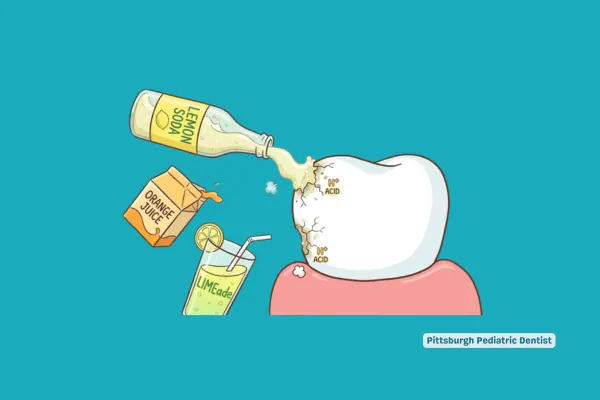
Citric acid is a natural acid found in citrus fruits such as lemons, limes, and oranges. Food companies also add it to packaged foods and drinks to create a tangy flavor, preserve freshness, and improve taste. Manufacturers often use citric acid to make low-sugar or sugar-free products taste more appealing. As a result, plenty of foods marketed as “healthy” or “better for you” still expose teeth to frequent acid contact throughout the day. Many parents mainly associate enamel damage with soda. What often gets overlooked is that acidic wellness drinks, flavored waters, and sour snacks can create similar concerns for developing teeth.Is Citric Acid Bad for Your Teeth?
Yes, citric acid can be bad for your teeth when exposure becomes frequent throughout the day. Tooth enamel starts softening when the mouth’s pH drops below about 5.5, and many acidic drinks fall far below that level. Lemon juice can measure close to pH 2, sports drinks often range between pH 2.5 and 3.5, and flavored sparkling waters commonly fall between pH 3 and 4. Citric acid is especially tough on enamel because it does more than create acidity. It can also bind to calcium minerals in teeth, making it easier for enamel to lose important minerals through a process called demineralization. In simple terms, the enamel gradually becomes weaker and less protective. That does not mean your child can never enjoy acidic foods or drinks. Occasional exposure is usually far less concerning than sipping, snacking, or grazing on acidic products all day. Saliva flow, hydration, brushing habits, and total daily acid exposure all influence how much risk citric acid creates for teeth.Why Citric Acid Damages Enamel More Aggressively Than Some Other Acids?
Not all acids affect teeth the same way. Citric acid stands out because it can do more than lower the mouth’s pH. It also binds to calcium in enamel and pulls those minerals away from the tooth surface through a process called chelation. That difference matters because two drinks may look similar on a nutrition label and even have close pH levels, yet a citric acid-based drink can still create greater enamel loss because of how it interacts with calcium. The damage usually starts with enamel softening. Once enamel weakens, teeth become more vulnerable to wear from brushing, chewing, temperature changes, and staining from foods or drinks. Repeated acid exposure can also wear enamel down enough to expose dentin, the inner layer of the tooth that naturally appears more yellow.Foods and Drinks With the Highest Citric Acid Risk
Some acidic foods expose teeth to brief contact, while others keep acid sitting on enamel for long periods. The biggest concern usually comes from products that children sip slowly, snack on repeatedly, or hold in the mouth before swallowing.- Sports drinks and electrolyte beverages often combine low pH levels with citric acid, creating an environment that softens enamel quickly. During physical activity, dehydration can also reduce saliva flow, leaving teeth with less natural protection. Many children now drink sports beverages casually, even without intense exercise.
- Sour candy and acidic gummies create a different kind of problem. The concentrated acids coat teeth while the sticky texture keeps those acids attached to enamel surfaces longer. Social media trends involving frozen sour candy and extreme sour snacks have made repeated acid exposure even more common among kids and teens.
- Lemon water and citrus wellness drinks may sound healthy, yet frequent sipping can expose enamel to acid for hours throughout the morning. Parents often focus on hydration benefits without realizing how repeated acid contact affects teeth.
- Plain sparkling water is generally less concerning for enamel, but flavored versions often contain citric acid and additional flavoring acids that increase erosion potential.
- Juice pouches and fruit smoothies can also create problems, especially when children sip them slowly over time. Thick smoothie residue may cling to teeth longer than parents expect, extending acid exposure after the drink is finished.
- Vitamin C gummies and chewable supplements combine acidity with prolonged mouth contact. Bedtime gummy vitamins can become especially tough on enamel because saliva production naturally drops during sleep, giving acids more time to affect teeth.
Why Frequency Matters More Than Quantity?
One of the biggest findings from dental erosion research is that how often your child consumes acidic drinks matters more than the total amount consumed at once. Slowly sipping a sports drink over several hours creates far more enamel stress than drinking it quickly during a meal. Saliva plays a major protective role against acidic foods and drinks. It helps neutralize acids, restore a healthier pH level, and return important minerals to enamel. Teeth need recovery time between acid exposures. When acidic drinks are consumed constantly throughout the day, the mouth stays in a lower pH environment for longer periods, giving enamel less opportunity to recover. That pattern shows up in plenty of everyday habits. A teenager carrying a sports drink between classes, a parent sipping lemon water all morning, or a child drinking flavored sparkling water throughout the afternoon may expose teeth to repeated acid contact dozens of times daily. Bedtime acidic drinks create another concern because saliva production naturally decreases during sleep, leaving enamel with less protection overnight.Signs Citric Acid May Already Be Affecting Your Child’s Teeth
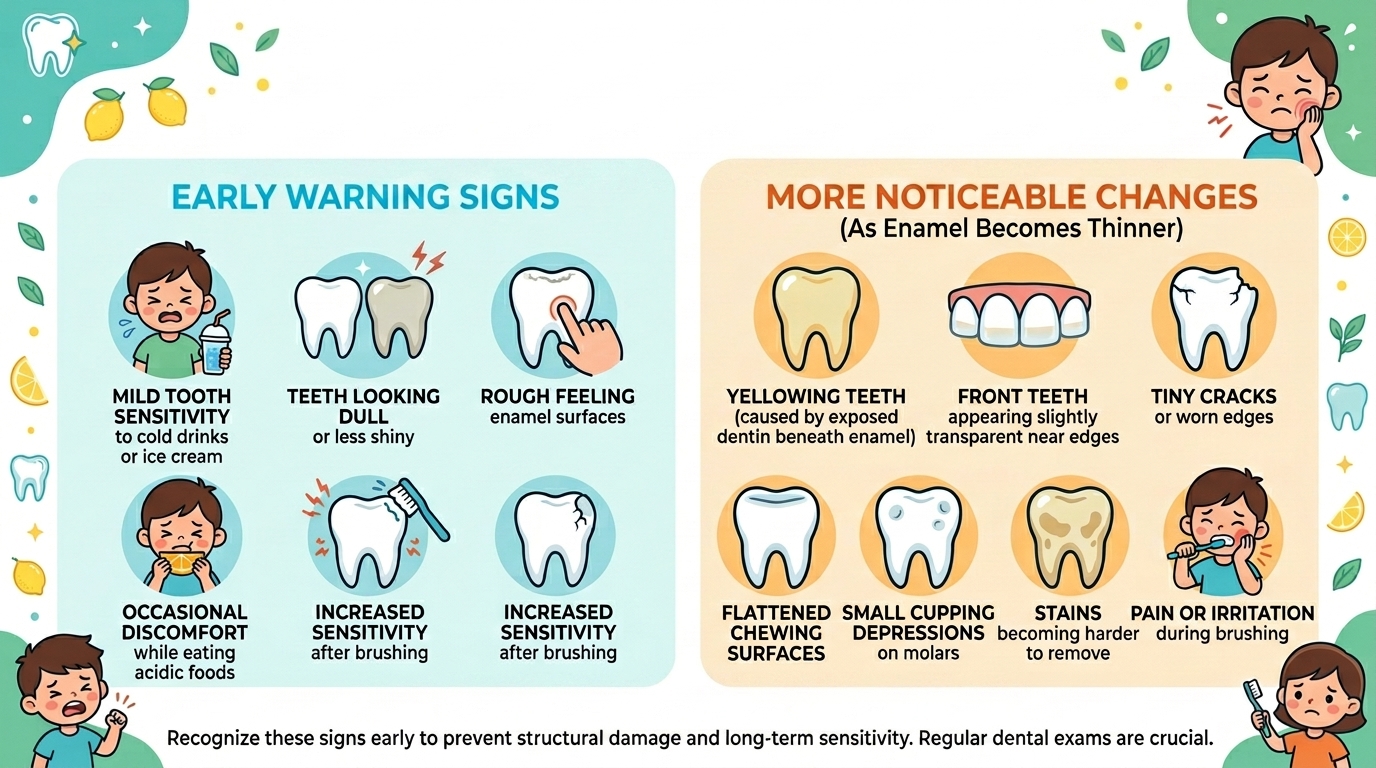 Enamel erosion often develops gradually, which means many parents do not notice the changes right away. A dental exam can often detect early enamel wear before major symptoms appear.
Early warning signs may include:
Enamel erosion often develops gradually, which means many parents do not notice the changes right away. A dental exam can often detect early enamel wear before major symptoms appear.
Early warning signs may include:
- Mild tooth sensitivity to cold drinks or ice cream
- Teeth looking dull or less shiny than before
- Rough feeling enamel surfaces
- Occasional discomfort while eating acidic foods
- Increased sensitivity after brushing
- Yellowing teeth caused by exposed dentin beneath the enamel
- Front teeth appearing slightly transparent near the edges
- Tiny cracks or worn edges
- Flattened chewing surfaces
- Small cupping depressions on molars
- Stains becoming harder to remove
- Pain or irritation during brushing
Why Brushing Right After Acidic Foods Can Make Things Worse?
Many parents assume that brushing immediately after acidic foods or drinks helps protect teeth. The opposite can happen in some situations. After exposure to citric acid, enamel temporarily softens. Brushing during that softened period can increase surface abrasion and wear away weakened enamel more easily. Dental professionals commonly recommend waiting about 30 to 60 minutes before brushing after acidic foods or drinks. During that waiting period, saliva helps neutralize acids and restore minerals to the enamel surface. Simple habits can help protect teeth while the mouth recovers:- Rinse with plain water after acidic drinks or snacks
- Chew sugar-free gum to stimulate saliva flow
- Avoid brushing immediately after lemon water, sports drinks, citrus fruits, or sour candy
- Wait before brushing at bedtime if your child recently consumed acidic foods
How to Reduce Citric Acid Damage Without Eliminating Every Acidic Food?
Protecting your child’s enamel does not mean removing every citrus fruit, smoothie, or flavored drink from their routine. Small habit changes can lower acid exposure significantly while still allowing children to enjoy the foods they like.- Limit constant sipping throughout the day. Acidic drinks are less damaging when consumed with meals because saliva production naturally increases during eating. Slowly sipping sports drinks, lemon water, or flavored sparkling water for hours keeps enamel under repeated acid attack.
- Rinse with plain water after acidic snacks or beverages. Water helps wash away acids and supports the mouth’s return to a safer pH level.
- Use fluoride toothpaste consistently. Fluoride strengthens enamel and supports remineralization, which helps weakened enamel recover minerals lost during acid exposure.
- Encourage the use of straws for acidic drinks when possible. A straw can reduce direct contact between acidic beverages and front teeth.
- Avoid acidic snacks or drinks before bed. Saliva production naturally drops during sleep, leaving teeth with less protection overnight.
- Schedule preventive dental visits regularly. Early enamel erosion can sometimes be identified and managed before more serious structural damage develops, which makes routine pediatric dental exams especially valuable for children with frequent acid exposure.
When to See a Pediatric Dentist?
Some enamel changes develop so gradually that children may not complain until sensitivity or visible wear becomes more noticeable. A professional evaluation can help identify acid-related enamel damage before it progresses further. Parents should consider scheduling a dental visit if they notice:- Ongoing sensitivity to cold foods or drinks
- Teeth appearing more yellow or dull
- Rough or uneven enamel surfaces
- Small chips, flattening, or translucent tooth edges
- Frequent consumption of sports drinks, flavored sparkling water, sour candy, or lemon water
- Teeth grinding combined with acidic eating or drinking habits
Protecting Enamel Starts With Everyday Habits
Citric acid is not automatically harmful to teeth, and children do not need to avoid every citrus fruit or acidic snack. The bigger concern comes from repeated exposure throughout the day, especially from drinks and foods that seem healthy at first. Small changes in daily habits can make a meaningful difference. Drinking acidic beverages with meals, reducing constant sipping, and recognizing early enamel changes all help protect developing teeth. At Pittsburgh Pediatric Dentist, families receive preventive guidance designed to support healthy enamel through every stage of childhood. When enamel erosion is identified early, children often have more options to protect their teeth before sensitivity and visible wear become harder to manage.FAQs
Are sugar-free drinks safe for children’s teeth?
Not always. Even without sugar, many drinks still contain acids that can weaken enamel over time. Sugar-free sports drinks, flavored sparkling waters, and energy drinks may still contribute to enamel erosion because of their acidity.Is sparkling water bad for teeth?
Plain sparkling water is generally considered much safer for teeth than soda or sports drinks. The bigger concern comes from flavored sparkling waters that contain citric acid or other added acids. Frequent sipping can increase enamel wear.Do vitamin C gummies affect children’s teeth?
Yes, they can. Many vitamin C gummies contain acids and sticky ingredients that stay on teeth longer. Taking them before bed may increase enamel erosion risk because saliva production naturally decreases during sleep.Can enamel grow back after acid damage?
Enamel cannot fully grow back once it is lost because the body does not regenerate enamel tissue. Early mineral loss may sometimes improve through remineralization supported by saliva and fluoride, but deeper erosion is permanent.How do pediatric dentists treat enamel erosion?
Treatment depends on the severity of enamel wear. Pediatric dentists may recommend fluoride varnish, sealants, dietary changes, hydration guidance, desensitizing products, and monitoring of wear patterns to help protect teeth from further erosion.Are fruit smoothies bad for teeth?
Fruit smoothies can expose teeth to prolonged acid contact, especially when children sip them slowly. Thick smoothie residue may also stay on enamel longer than thinner drinks. Smoothies made with highly acidic fruits can increase erosion risk when consumed frequently.What drinks are safest for children’s enamel?
Plain fluoridated water and milk are generally the safest options for enamel health. They do not expose teeth to the same acidic environment created by sports drinks, soda, citrus beverages, or flavored sparkling waters.Can dehydration increase acid erosion risk?
Yes. Saliva helps neutralize acids and restore minerals to enamel. Dehydration reduces saliva flow, leaving teeth less protected against acidic foods and drinks. This is one reason sports drinks, combined with dehydration, can increase erosion risk.

Dr. Morgan Choe, DMD
Dr. Morgan Choe focuses on preventive care, parent education, and creating a comfortable dental experience for children.
Meet Dr. Morgan Choe